Yacht Caulking
How to re-caulk teak decking

A teak deck is one of the most defining visual features of a yacht – power or sail, vintage or modern. Beyond its traditional appeal, teak provides excellent grip underfoot, natural insulation and a resilient surface capable of withstanding decades of exposure.
Yet even the finest teak deck is only as sound as the caulking that seals the seams between each plank. Over time, those seams degrade. And when they do, it’s time to act.
We spoke to boat builder Adam Symes from Ancasta Yacht Services about why timely deck re-caulking is not just about cosmetics – it’s also vital structural maintenance.
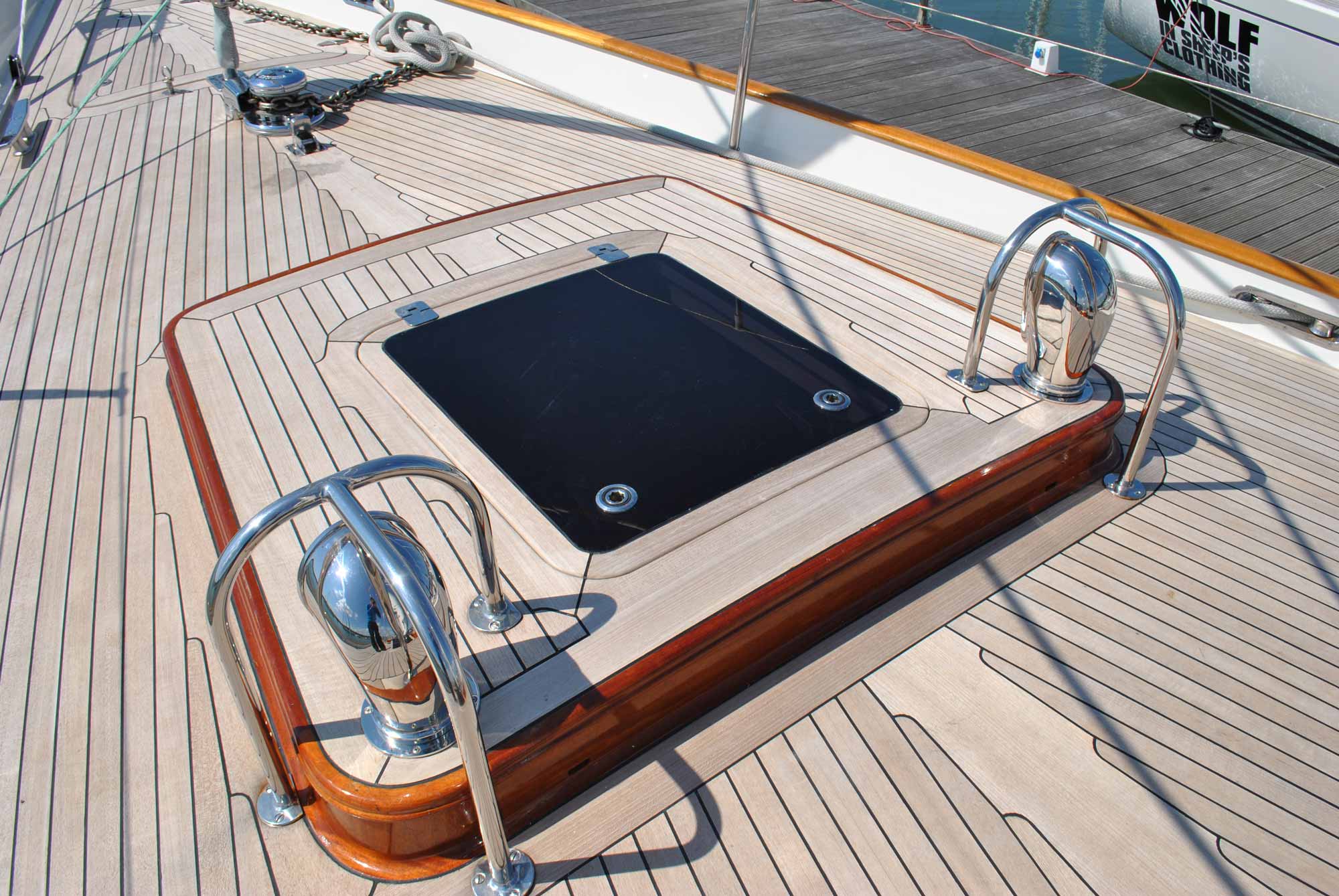
Why yacht caulking matters
“The caulking lines between teak planks are not just decorative,” says Adam. “They form a flexible watertight barrier, allowing each plank to expand and contract with changes in temperature and humidity.
“As the seasons change, summer heat turns to winter damp and the teak responds. Without sound, elastic caulking, the seams can open, crack or lose adhesion.
“When caulking fails, water begins to penetrate beneath the planks. This can lead to moisture seeping in below the deck, a breakdown of adhesive and, in severe cases, deck delamination or rot in underlying structural aspects of the yacht.”
Early signs include cracking, gaps, raised edges, or caulking that feels brittle rather than rubbery.
Adam continues: “Left unattended, minor deterioration becomes a far more invasive and costly repair. Recaulking, carried out at the right time, preserves both the deck’s longevity and the yacht’s value.”
Materials and modern developments
“Traditional teak decks were often caulked with polysulphide compounds,” explains Adam. “Today, advanced polyurethane sealants are commonly used for their superior UV resistance and elasticity, with product choice depending on deck construction, bonding system and expected cruising conditions.
“Equally important is the adhesive beneath the teak. Modern vacuum-bonded decks behave differently to traditionally screwed and bunged installations. Understanding these structural nuances allows us to determine both seam depth and material selection.”
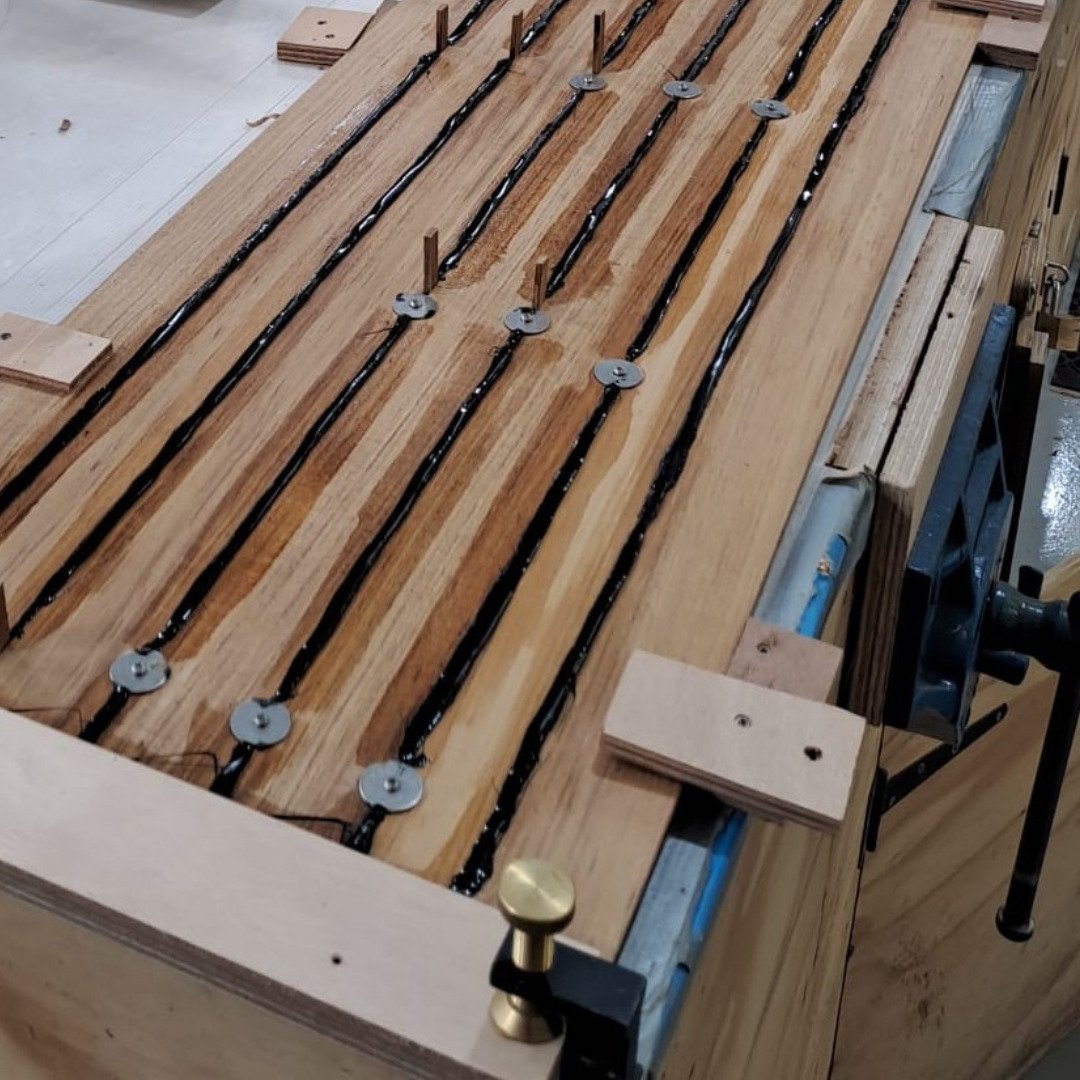
The recaulking process: Precision at every stage
Recaulking is a methodical, labour-intensive process that demands experience and specialist tooling. It is not simply a matter of applying new sealant over the old.
1. Inspection and assessment
The deck is inspected to evaluate seam failure and remaining teak thickness. Precise measurement is essential to avoid over-sanding and permanent damage.
2. Removal of old caulking
The existing compound is carefully routed out, taking care not to damage plank edges. Seams are then thoroughly cleaned to ensure proper adhesion.
3. Surface preparation
Seams are taped when required to protect the teak and maintain clean, sharp lines before recaulking.
4. Application of primer and new caulking
A suitable marine-grade sealant is selected and applied, with primer used where necessary. The compound is carefully packed into the seams to eliminate voids.
5.Curing and fairing
After curing, the deck is lightly sanded flush, restoring a uniform finish while preserving maximum teak thickness.
Each step demands both technical knowledge and practical craftsmanship. Mistakes at any stage can shorten the lifespan of the repair.
Professional teak restoration
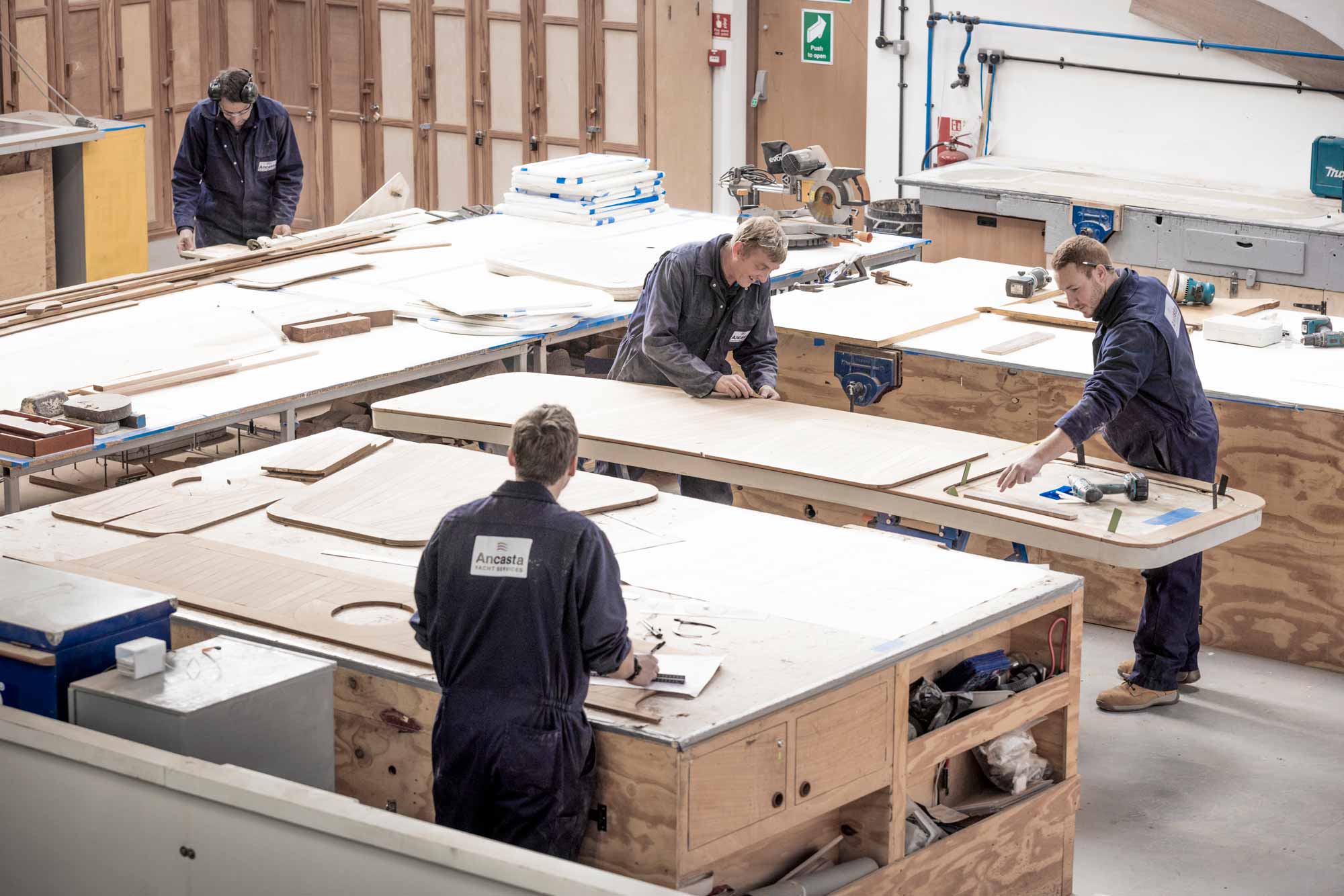
At Ancasta Yacht Services, teak deck re-caulking is approached not as routine maintenance but as specialist boatbuilding work. With a background steeped in maritime craftsmanship, Adam is well-placed to lead the team:
“Having been mentored by traditional shipwright Pete Burnard, I’ve been laying teak decks for over 25 years and re-caulking is a meticulous process. We assess each deck individually; seam depth, material compatibility and long-term performance are all considered before we begin.”
Environmental control is also a constant challenge.
“Temperature, humidity and surface moisture can directly affect adhesion and curing times,” he says. “Any outdoor work requires careful scheduling and weather monitoring – our undercover workshops certainly come into their own for this type of project.”
Protecting your investment
Re-caulking decks before failure becomes structural protects not only the deck itself but the integrity of the entire vessel. And entrusting that work to experienced specialists makes the difference between a cosmetic refresh and a durable, long-term solution.
With decades of hands-on boatbuilding experience, Adam Symes and the team at Ancasta Yacht Services are uniquely positioned to deliver precisely that – preserving your deck for many years to come.
Request a Quote
Part of the Ancasta Group, Ancasta Yacht Services provides refit, repair, and maintenance facilities in Hamble, Southampton, supporting owners preparing for the season ahead.
If you are interested in having your teak decks recaulked this winter, by our skilled inhouse team, please get in touch for a personalised quote.


Ancasta Yacht Services Ltd
Port Hamble, Satchell Lane, Hamble, Southampton, SO31 4NN
The Port Hamble AYS Office with stunning views overlooks the River Hamble.
This is a prime location in the beautiful breathing space between the cities of Southampton, Winchester and Portsmouth.
Ancasta Yacht Services:
T: +44 (0)2380 454 111